La Storia: A Comprehensive Evaluation for Design Professionals
In the evolving landscape of digital typography, finding a typeface that balances historical authenticity with modern functionality remains a persistent challenge. La Storia has emerged as a notable option for designers seeking to inject narrative depth into their projects. This article provides an objective analysis of the font family, exploring its technical specifications, aesthetic characteristics, and practical applications to help professionals determine if it aligns with their specific design requirements.
Understanding La Storia
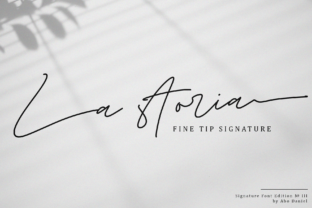
La Storia, which translates to "The Story" in Italian, is a script typeface designed to emulate the fluidity and elegance of hand-lettering from the early 20th century. Unlike many contemporary script fonts that rely on rigid digital construction, this family aims to capture the organic imperfections found in traditional calligraphy. The design features variable stroke widths, subtle ink traps, and ligatures that mimic the natural flow of a pen moving across paper.
The font is typically available in multiple weights and styles, offering versatility beyond simple decorative text. It includes standard Latin characters, extensive punctuation sets, and specialized glyphs for numerals and symbols. These elements are crafted to ensure legibility while maintaining the artistic integrity of the script form. By analyzing the anatomy of the letters, one can observe how the designer has prioritized rhythm and connection between characters, creating a visual experience that feels both personal and curated.
Reasons for Interest in La Storia
Designers often gravitate toward La Storia when a project requires a sense of history or human connection. In an era where digital content can feel sterile and mass-produced, this typeface offers a counter-narrative. Its primary appeal lies in its ability to convey emotion through form. The slight irregularities in the strokes suggest a human hand behind the creation, which can foster trust and intimacy with the viewer.
- Nostalgic Appeal: The style resonates with vintage aesthetics without appearing dated, making it suitable for brands that wish to highlight heritage.
- Personal Touch: It adds a layer of customization that standard sans-serif or serif fonts cannot achieve, allowing for unique branding identities.
- Visual Rhythm: The varying line weights create a dynamic reading experience that guides the eye naturally through the text.
Furthermore, the font's adaptability allows it to function in various contexts. Whether used for large-scale headlines, intricate packaging, or delicate editorial layouts, La Storia maintains its character. This flexibility makes it a valuable asset for designers working across different media platforms, from print brochures to responsive web interfaces.
Benefits and Practical Considerations
When evaluating La Storia for a project, several benefits stand out. The most significant advantage is its capacity to elevate the perceived value of a design. Text set in this typeface often appears more bespoke and thoughtful, which can enhance brand perception. Additionally, the comprehensive glyph set ensures that designers have access to the necessary tools for internationalization and complex typographic treatments.
However, like any specialized typeface, there are tradeoffs to consider. Script fonts inherently require careful management to remain legible. The connecting strokes and flourishes can sometimes reduce readability at smaller sizes or in low-resolution environments. Designers must be prepared to invest time in adjusting tracking, leading, and kerning to ensure the text flows correctly. Overuse of the font can also lead to visual fatigue, as the high level of detail may become overwhelming if applied to body copy or long-form content.
Another consideration is compatibility. While modern web technologies support variable fonts, older browsers or specific CMS platforms might not render all the stylistic alternates correctly. It is essential to test the font across target devices before committing to a full implementation. Additionally, the licensing terms should be reviewed thoroughly to ensure compliance with the intended use case, whether commercial, editorial, or personal.
Situations Where La Storia Is a Strong Fit
La Storia excels in scenarios where emotional resonance and distinctiveness are paramount. It is particularly well-suited for wedding invitations, luxury branding, artisanal product packaging, and boutique hospitality materials. In these contexts, the font acts as a visual cue for quality and attention to detail.
For editorial design, such as magazine covers or book titles, the typeface can serve as a powerful anchor that draws the reader in. The narrative quality of the script complements storytelling formats, making it ideal for publications focused on lifestyle, culture, or history. Similarly, in logo design, La Storia can provide a signature element that distinguishes a brand from competitors who rely on generic geometric forms.
Projects requiring a localized or cultural touch also benefit from this font. The Italian influence in the name and design language can subtly reinforce themes related to European heritage, culinary arts, or fashion. When used appropriately, it bridges the gap between modern design standards and timeless tradition.
When Alternatives May Be Worth Considering
Despite its strengths, La Storia is not a universal solution. For projects demanding maximum clarity and speed of reading, such as news websites, technical documentation, or user interface elements, a neutral sans-serif or a highly optimized serif typeface would be more appropriate. The decorative nature of script fonts can distract from the primary message in data-heavy or informational contexts.
If the goal is to achieve a minimalist or futuristic aesthetic, the organic curves of La Storia may clash with the desired visual language. In cases where multilingual support is critical, designers should verify if the font family includes characters for languages outside the Latin alphabet, as many script fonts are limited to Western European scripts. If broader language coverage is required, a more robust type system might be necessary.
Additionally, budget constraints or strict licensing limitations could make alternative options more viable. Some designers prefer open-source alternatives that offer similar aesthetic qualities without the associated costs. Evaluating the total cost of ownership, including potential fees for extended licenses or web embedding, is crucial before finalizing the selection.
Practical Decision-Making Insights
To determine if La Storia aligns with your goals, start by defining the core message of your project. Ask yourself if the audience needs to feel a personal connection or if they prioritize information density. If the former is true, the font is likely a strong candidate. Conducting a side-by-side comparison with other script families can also reveal nuances in weight, spacing, and character shape that might influence the decision.
Test the font in context. Create mockups using actual content rather than Lorem Ipsum to see how the words interact with the layout. Pay attention to how the font behaves at different scales and on different backgrounds. If the text becomes illegible or loses its charm under stress, it may not be the right tool for the job.
Ultimately, the choice depends on the balance between aesthetics and utility. La Storia offers a stunning and authentic script that will easily add a personal touch to any design endeavor, provided it is used with intention and restraint. By understanding its capabilities and limitations, designers can make informed decisions that enhance the overall impact of their work.
Whether you are building a brand identity from scratch or refreshing an existing visual system, taking the time to evaluate La Storia objectively ensures that the final result meets both creative and functional standards. The font serves as a reminder that typography is not merely about conveying text but about shaping the emotional journey of the reader.