Angie Script: A Playful Font for Creative Projects
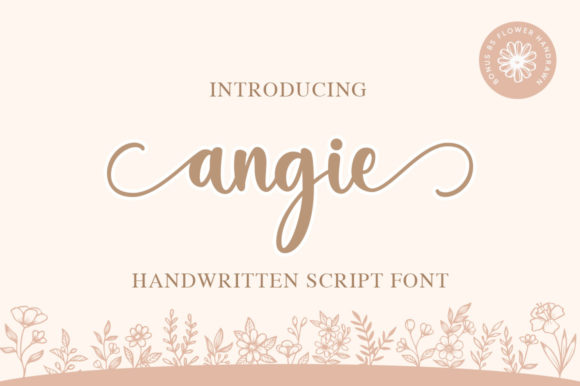
Angie is a lovely script font featuring charming, playful characters that seem to dance along the baseline. Unlike rigid typefaces that demand strict adherence to grids, this design invites a sense of movement and personality into any composition. It captures the essence of hand-lettering without requiring years of practice with a calligraphy pen. The result is a digital tool that feels organic, warm, and distinctly human.
At its core, Angie is defined by its unique structure. The letters are not merely static shapes; they possess a dynamic flow that mimics the natural rhythm of writing. This characteristic makes it an excellent choice for projects where emotional connection matters more than technical precision. Whether you are designing a wedding invitation or a product label, the font adds a layer of approachability that standard serif or sans-serif fonts often lack.
Why Different Audiences Care About Character
The value of a specific typeface varies significantly depending on who is using it and what they hope to achieve. For one person, a font is a utility; for another, it is a brand asset. Angie bridges the gap between decorative flair and functional readability, but its appeal shifts across different user groups.
For beginners in graphic design, the primary concern is often ease of use. They need tools that offer immediate results without a steep learning curve. Angie fits this need perfectly because it is straightforward to implement. You do not need advanced knowledge of kerning or ligatures to make it look good; the characters are designed to sit comfortably together. This lowers the barrier to entry, allowing novices to create professional-looking headers or titles quickly.
In contrast, experienced creators and professionals prioritize flexibility and control. They might be drawn to Angie not just for its aesthetic, but for how it integrates into complex workflows. The font's ability to maintain legibility while offering stylistic variation allows seasoned designers to experiment with layouts without compromising clarity. They appreciate that the font can support both bold statements and subtle accents within the same document.
Ease of Use vs. Technical Control
One of the most significant advantages of Angie is its encoding system. It is PUA encoded, which means you can access all glyphs and swashes with ease. This technical detail has profound implications for how users interact with the text.
- Accessibility: PUA encoding ensures that special characters, alternate letterforms, and decorative swashes are readily available. Users do not have to hunt through obscure menus or rely on third-party plugins to find these features.
- Consistency: Because the glyphs are built into the font file, the rendering remains consistent across different software platforms. This reliability is crucial for publishers and freelancers who need to ensure their files look the same on every screen or print job.
- Creativity: The availability of swashes allows for rapid customization. A designer can turn a standard "A" into a flourish-heavy version with a single keystroke, speeding up the creative process significantly.
Practical Applications Across Industries
Understanding how Angie functions in real-world scenarios helps clarify whether it matches your specific goals. The font's playful nature makes it versatile, but it is not a universal solution for every project type.
Marketers and small business owners often struggle to differentiate their brands in crowded markets. Using a generic font can make a business blend into the background. Angie offers a distinct voice that can convey friendliness and approachability. Imagine a local bakery using Angie for their menu board or social media graphics. The dancing characters suggest a handmade quality that resonates with customers looking for authentic experiences. In this context, the font acts as a visual shorthand for the brand's values.
Similarly, bloggers and educators use typography to set the tone of their content. When teaching a subject that requires a relaxed atmosphere, such as art, cooking, or lifestyle tips, a stiff font can feel out of place. Angie softens the reading experience, making the content feel less like a lecture and more like a conversation. This psychological effect can increase engagement and time spent on a page.
For hobbyists and consumers, the appeal lies in personalization. DIY enthusiasts creating scrapbooks, party decorations, or personalized gifts often seek fonts that feel special. Angie provides that "handmade" touch without the effort of crafting each letter by hand. It allows individuals to produce high-quality designs that look custom-made, satisfying the desire for uniqueness at a low cost.
Evaluating Quality and Long-Term Usefulness
When selecting a font, professionals must weigh several priorities beyond just how it looks. Cost is a factor, but so is commercial value. A font that is cheap to acquire but difficult to license for commercial projects can lead to legal issues down the line. Conversely, a font that is expensive but offers extensive glyph sets and robust encoding may provide better long-term usefulness.
Angie strikes a balance here. Its PUA encoding suggests a high level of completeness, reducing the need to purchase additional character packs later. This foresight saves money and time, which are critical resources for entrepreneurs managing tight budgets. Furthermore, the quality of the curves and the smoothness of the transitions between letters indicate a well-crafted product. High-quality fonts tend to age better; they remain readable even when scaled down or used in black-and-white print, ensuring the investment holds its value over time.
However, not every project benefits from this style. Corporate reports, legal documents, or technical manuals require absolute neutrality and clarity. In these cases, the playful nature of Angie might undermine the authority of the message. It is essential to identify whether your project demands seriousness or warmth. If the goal is to inform rather than entertain, a more neutral typeface might be the prudent choice.
Making the Right Choice for Your Project
Deciding to use Angie ultimately comes down to alignment with your project's intent. Ask yourself if the message you want to convey aligns with the font's personality. Does your audience respond well to whimsy and charm? Is the medium suitable for display text rather than body copy?
If you are a professional designer, consider testing Angie against your existing brand guidelines. Does it complement your other assets, or does it clash? Often, the best use of a script font is as a complementary element, paired with a clean, simple sans-serif for readability. This combination leverages the strengths of both: the structure of the sans-serif and the soul of Angie.
For those new to typography, start small. Try using Angie for a single headline or a logo mark before committing to an entire website redesign. This approach minimizes risk and allows you to gauge the reaction of your audience. Remember that typography is a powerful tool for communication; choosing the right one can transform a mundane layout into something memorable.
Ultimately, Angie represents a bridge between digital convenience and analog charm. Its PUA encoding ensures that the full range of its potential is accessible, while its playful design brings a human touch to the screen. Whether you are building a brand, creating educational materials, or simply expressing yourself creatively, understanding the nuances of this font will help you harness its power effectively.