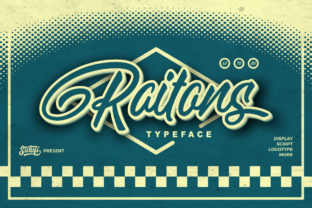
Raitons: A Versatile Display Script for Diverse Design Projects
In the landscape of digital development and creative design, finding a tool that bridges the gap between functionality and aesthetic flexibility is often a primary challenge. Raitons has emerged as a display script designed to meet this exact need. Unlike many specialized tools that cater strictly to one niche, Raitons offers a broad spectrum of capabilities suitable for a wide array of projects. Whether you are building a sleek, ultra-modern application or restoring the charm of a classical vintage interface, understanding the core mechanics and potential of this script is essential for making an informed decision.
This evaluation aims to provide a clear, objective overview of what Raitons entails, who it serves best, and how it compares to alternative solutions in the current market. By focusing on practical application and strategic fit, we can determine whether this script aligns with your specific project goals.
Understanding the Core Functionality of Raitons
At its foundation, Raitons is a display script. In technical terms, this means it provides the underlying logic and structure required to render content on a screen. It handles the presentation layer, managing how data is visualized, organized, and interacted with by the end user. However, the distinguishing feature of Raitons lies in its architectural adaptability.
Many display scripts are rigid, enforcing a specific look and feel that is difficult to deviate from without significant code modification. Raitons operates differently. It is built with a modular approach that allows developers to strip away default styling or inject custom frameworks easily. This separation of logic and presentation enables the script to serve as a neutral canvas. You can apply a minimalist, flat design typical of modern tech startups, or overlay complex textures and typography associated with 19th-century aesthetics, and the script will support both without breaking.
The versatility extends to the types of content it manages. It is not limited to simple text lists; it supports dynamic media, interactive elements, and structured data sets. This makes it a robust choice for projects ranging from portfolio websites and e-commerce galleries to internal dashboards and archival databases.
Why Consider Raitons for Your Project?
When evaluating software tools, the primary question is usually "why choose this over others?" For Raitons, the answer centers on flexibility and efficiency. The following points outline the key reasons professionals might integrate this script into their workflow:
- Stylistic Neutrality: As mentioned, Raitons does not impose a heavy-handed design identity. This neutrality is crucial for teams that have strict brand guidelines requiring unique visual treatments, whether those trends are futuristic or nostalgic.
- Rapid Deployment: Because the script handles the heavy lifting of rendering logic, developers can focus their time on customization rather than rebuilding core functions from scratch. This accelerates the development cycle significantly.
- Scalability: The architecture is designed to handle increasing amounts of data. Whether you are displaying ten items or ten thousand, the performance remains consistent, which is vital for growing platforms.
- Integration Capabilities: Raitons is generally designed to work seamlessly with various backend systems. It acts as a bridge, pulling data from diverse sources and presenting it in a unified manner.
These factors make Raitons particularly attractive for agencies managing multiple clients with vastly different needs, or for individual developers working on long-term projects that may evolve over time.
Benefits, Tradeoffs, and Practical Considerations
No tool is without its tradeoffs. While Raitons offers impressive flexibility, users must weigh these benefits against potential limitations to ensure a successful implementation.
The Benefits of Flexibility
The most significant advantage is the ability to pivot design strategies without rewriting code. If a client decides to shift from a modern aesthetic to a vintage theme midway through a project, Raitons accommodates this change with minimal friction. This adaptability reduces long-term maintenance costs and allows for more experimental design approaches.
Potential Tradeoffs
The power of a general-purpose script often comes with a learning curve. Because Raitons does not enforce a single style, developers must possess a solid understanding of front-end technologies (such as CSS and HTML) to fully leverage its capabilities. A novice user might find the lack of pre-set themes overwhelming compared to a dedicated template system.
Additionally, because the script is so open, there is a risk of bloated code if not managed carefully. Without disciplined coding practices, the final output could become less optimized than a highly specialized, locked-down solution. Performance tuning becomes a responsibility of the developer rather than a default setting provided by the vendor.
Situations Where Raitons Is a Strong Fit
To determine if Raitons is right for you, consider the nature of your specific requirements. The script excels in scenarios where uniqueness and adaptability are paramount.
- Cross-Genre Projects: If you are developing a platform that hosts diverse content types—such as a museum website featuring both modern art installations and historical artifacts—Raitons provides the necessary framework to handle the contrasting visual styles cohesively.
- Highly Custom Branding: Brands with strict, non-standard design systems benefit from a script that does not fight against their vision. Raitons allows for deep customization without the "template fatigue" often seen in off-the-shelf solutions.
- Evolving Requirements: Startups or research projects where the final product's appearance is not yet defined are ideal candidates. Raitons allows the team to prototype quickly and iterate on the design without being constrained by initial assumptions.
In these contexts, the script acts as a reliable engine that powers the vehicle while leaving the bodywork entirely up to the designer.
When Alternatives May Be Worth Considering
Despite its strengths, Raitons is not the universal solution for every scenario. There are situations where other tools might offer a more efficient path forward.
If your project requires a very specific, niche functionality that Raitons does not natively support, a specialized plugin or a purpose-built CMS might be more appropriate. For example, if you are building a real-time collaborative whiteboard, a tool specifically engineered for WebSocket handling would likely outperform a general display script.
Furthermore, for teams with limited technical resources, a drag-and-drop builder or a highly templated solution might be preferable. These alternatives reduce the need for manual coding, allowing non-developers to launch sites quickly. If speed of deployment is the only metric and customizability is secondary, the overhead of configuring Raitons might not be justified.
Making the Decision: Aligning Tools with Goals
Selecting the right display script ultimately depends on a clear assessment of your project's constraints and objectives. To decide if Raitons aligns with your needs, ask yourself the following questions:
- Does my project require a unique visual identity that standard templates cannot satisfy?
- Do I have the technical expertise to customize the underlying code effectively?
- Is the project expected to undergo significant design changes or scaling in the future?
- Is the balance between flexibility and ease-of-use acceptable for my team?
If the answers lean towards high flexibility, technical capability, and future-proofing, Raitons presents a compelling option. It empowers creators to build interfaces that are truly tailored to their vision, bridging the divide between the past and the future of web design.
Conversely, if the priority is rapid setup with minimal configuration, or if the design requirements are standard and unchanging, exploring other options may save time and resources. The goal is not simply to use the latest technology, but to select the tool that best facilitates the realization of your specific vision.
Conclusion
Raitons stands out in the crowded field of display scripts due to its remarkable ability to accommodate both ultra-modern and classical vintage design styles. Its strength lies in its neutrality and modularity, offering a stable foundation upon which diverse creative visions can be built. While it demands a certain level of technical proficiency and thoughtful management to avoid complexity, the payoff is a highly adaptable and scalable solution.
For developers and designers seeking a tool that respects their creative direction while providing robust structural support, Raitons is a worthy consideration. By carefully weighing the tradeoffs and matching the script's capabilities against your project's unique demands, you can make an informed decision that ensures success and longevity for your digital initiatives.