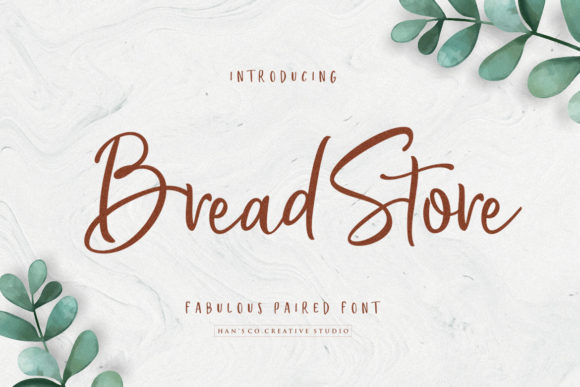
Bread Store Font Review: A Balanced Look at This Curly Script Duo
When designers seek a typeface that balances whimsy with sophistication, the search often leads to script fonts that can easily veer into caricature or become too ornate for practical use. Bread Store enters this crowded space as a fun script font duo designed with an iconic curly and comical style, yet it manages to retain a sense of polish that many competitors lack. It is not merely a novelty; it is a tool intended to represent elegance with its clean lines and modern swashes.
For professionals aged 20 to 50 who are evaluating typography for branding, editorial layouts, or digital interfaces, understanding where Bread Store fits in the broader landscape of design resources is essential. This review explores the distinct characteristics of the font, compares its utility against standard script options, and outlines the specific scenarios where it shines versus when a more restrained choice might be necessary.
Defining the Character of Bread Store
The primary distinction of Bread Store lies in its duality. On one hand, it embraces a "comical" aesthetic through exaggerated curls and playful connections between letters. This approach suggests a brand personality that is approachable, creative, and perhaps slightly nostalgic. On the other hand, the inclusion of "clean lines" ensures that the text remains legible even at smaller sizes or in complex compositions. The "modern swashes" mentioned in its description serve as the bridge between these two opposing traits, adding a touch of high-end fashion to the otherwise lighthearted structure.
This combination makes Bread Store distinct from traditional calligraphy fonts, which often prioritize historical accuracy over readability, and from purely decorative display fonts, which may sacrifice clarity for effect. The font duo aspect implies that users likely have access to multiple weights or styles within the family, allowing for greater flexibility in pairing the script with sans-serif or serif body text. In a market saturated with scripts that look identical across different platforms, this attention to structural integrity sets a higher baseline for quality.
Evaluating Fit: When Bread Store Meets the Brief
Selecting a typeface is rarely about finding the "best" font in isolation; it is about finding the right fit for a specific communication goal. Bread Store excels in contexts where the goal is to evoke emotion without overwhelming the viewer. For instance, in packaging design for artisanal goods—such as bakeries, confectioneries, or boutique food products—the font's name alone suggests a thematic connection. However, its application extends well beyond the culinary sector.
- Event Branding: Weddings, birthday parties, and creative workshops often require a balance of formality and fun. Bread Store can anchor invitations or signage, providing a focal point that feels personal rather than corporate.
- Social Media Graphics: In environments where attention spans are short, the unique curves of the font can stop a scroll. Its modern swashes add a contemporary edge that prevents the design from looking dated or overly retro.
- Editorial Headlines: While unsuitable for long-form body copy, the font serves as a powerful headline element in magazines or blogs focused on lifestyle, arts, or culture.
The key to using Bread Store effectively is restraint. Because the font carries such a strong visual voice, it demands that the surrounding elements remain neutral. If paired with another busy pattern or a competing decorative font, the result can quickly become chaotic. The clean lines of the typeface act as a stabilizing force, but only if the rest of the design composition respects that stability.
Comparative Analysis: Script Fonts and Design Categories
To understand the value proposition of Bread Store, it is helpful to compare it against the broader categories of script and display typography. The market generally divides into three main approaches: formal calligraphy, casual handwriting, and decorative novelty.
Formal calligraphy fonts often mimic the ink flow of a nib pen. They are elegant and timeless but can feel stiff or impersonal. They are excellent for legal documents or luxury brands requiring a sense of heritage, but they may fail to convey the "fun" required by modern startups or youth-oriented brands. Casual handwriting fonts, conversely, aim for authenticity. They look like someone wrote them with a marker or brush. While relatable, they can sometimes appear messy or unprofessional if the letterforms are inconsistent.
Bread Store occupies a middle ground. It avoids the rigidity of formal calligraphy while maintaining a level of polish that casual scripts often lack. The "iconic curly" style provides the personality of a handwritten note, but the "modern swashes" ensure it looks intentional and designed. This makes it a versatile alternative for projects that need to stand out but cannot afford to look amateurish.
However, tradeoffs exist. The very features that make Bread Store distinctive—the heavy curls and swashes—can limit its scalability. In small web applications or mobile interfaces, the details may blur, reducing legibility. Furthermore, the comical nature of the font means it is ill-suited for serious subjects. Using Bread Store for a financial report, a medical announcement, or a somber memorial would create a tonal dissonance that undermines the message. The font demands a context where playfulness is appropriate.
Decision Factors for Designers
When evaluating whether to incorporate Bread Store into a project, designers should consider several practical factors. First, assess the target audience. Does the demographic appreciate quirky, bold aesthetics? Adults aged 20 to 50, particularly those interested in lifestyle trends, are often receptive to fonts that break the mold of standard corporate sans-serifs.
Second, consider the medium of delivery. High-resolution print materials allow the intricate details of the swashes to shine. Digital screens, especially lower-resolution ones, may require careful testing to ensure the curves do not disappear or merge. Third, evaluate the hierarchy. Will the font be used for a single headline, or will it need to carry a significant portion of the text? Given its density, Bread Store is best reserved for headlines, logos, and short phrases.
Finally, think about longevity. Trends in typography shift rapidly. A font that is "fun" today might feel "dated" in five years. Bread Store's blend of modern and classic elements gives it a better chance of remaining relevant longer than a purely trend-driven novelty font. The clean lines provide a timeless foundation that anchors the comical elements.
Alternatives and Complementary Choices
If Bread Store does not align perfectly with a project's needs, there are other avenues to explore. For projects requiring more legibility but still seeking a script feel, a thinner, less ornate cursive might be preferable. These options offer a softer approach that works well for background textures or subtle accents.
Conversely, if the goal is maximum impact and the content allows for extreme stylization, a fully decorative display font with heavier weights could be considered. These fonts often feature more dramatic serifs or unusual shapes that command immediate attention but offer less versatility in pairing.
In some cases, the solution is not to choose a different script but to pair Bread Store with a contrasting typeface. A sturdy, geometric sans-serif can provide the necessary counterbalance to the flourishes of the script. This juxtaposition highlights the elegance of the swashes while ensuring the overall layout remains grounded and readable. The decision ultimately depends on the specific emotional resonance the designer wishes to achieve.
Making the Final Choice
The decision to adopt Bread Store is not a binary one; it is a strategic choice based on the specific requirements of the communication task. It is a font that rewards careful consideration and punishes hasty application. Its unique ability to merge a comical style with elegant lines makes it a standout option for designers looking to inject personality into their work without sacrificing professionalism.
For those exploring alternatives, the process should involve testing the font in real-world scenarios. Mockups of business cards, website headers, and social media posts can reveal how the clean lines hold up under pressure and whether the swashes enhance or clutter the design. By approaching the selection process with a critical eye and a focus on user experience, designers can determine if Bread Store is the right tool for the job.
In conclusion, Bread Store represents a thoughtful evolution in script typography. It acknowledges the desire for character in design while respecting the fundamental rules of readability and harmony. Whether used to launch a new product, brand a creative event, or simply add a touch of flair to a portfolio, its distinct features offer a compelling option for the modern design toolkit. As always, the success of the font lies not in the typeface itself, but in how skillfully it is integrated into the broader visual narrative.